How to Fix Water Rings and Water Damage on Wood Furniture
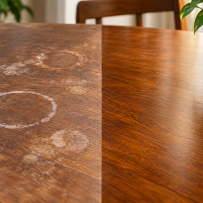
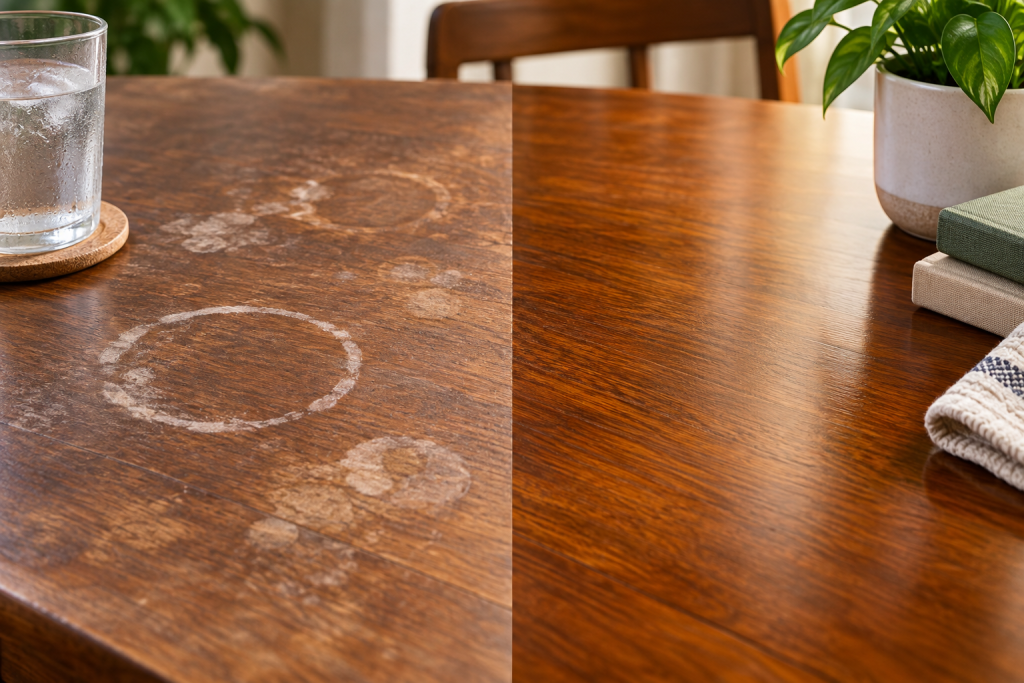
A sweating glass left on a coffee table overnight or a vase that dripped onto a dining table may not seem like much, but even a small amount of water can leave a mark on wood furniture. Once that cloudy ring or dark blotch appears, it can be hard to notice anything else in the room.
Most water rings are not as serious as they look. Water damage happens in stages, and the stage your piece is in determines what it takes to correct it. Some rings can be removed in just a few minutes with items you already have at home. Rings that have soaked past the finish into the wood itself require professional stripping and refinishing to be fully removed.
At Furniture Medic by MasterCare Experts, we repair and restore water damaged wood furniture for homes throughout Carol Stream, Wheaton, West Chicago, Naperville, Aurora, and the surrounding western Chicago suburbs. In this guide, we explain what causes water rings, how to tell how deep the damage goes, and what you can safely try yourself before calling a professional.
What Causes Water Rings on Wood Furniture
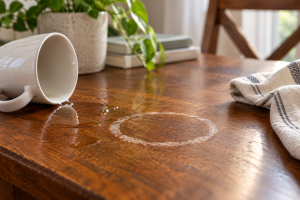
The finish on wood furniture and surfaces acts as a barrier to protect the porous wood from moisture. When water sits on that surface, it works its way into microscopic gaps in the finish and gets trapped underneath. That trapped moisture scatters light differently than the finish around it which results in the haze. Heat can make the damage worse by softening the finish and allowing moisture to penetrate more easily. That is why heat rings and water rings often appear in the same spot, especially where hot mugs or serving dishes have been left on the surface.
The color of the mark tells you how far the moisture traveled:
- White or cloudy rings are caused by moisture trapped in the finish layer. The wood underneath is usually untouched. This is the most common type of water ring and the most likely to come out at home.
- Dark brown or black rings and blotches mean the water made it through the finish and into the wood. The staining is a reaction between moisture, tannins in the wood, and sometimes minerals or metal. Dark stains almost always require sanding, bleaching, or refinishing.
- Gray or silvered patches with a rough, raised feel point to longer term exposure. The finish has failed and the wood fibers have started to break down.
How to Tell How Deep the Water Damage Goes
Before you try any repair, run your fingertips lightly over the mark. If the surface feels smooth and even, the damage is in the finish. If you can feel a ridge, a rough patch, or a soft spot, moisture has reached the wood. Look at the piece in low, angled light as well. Lifting veneer, small bubbles, hairline cracks, and cupping across a tabletop are signs the water has caused structural damage. This type of damage requires repair from a professional.
How to Remove White Water Rings from Wood Furniture
Before trying to remove a white water ring, test your chosen method on an inconspicuous area, such as the underside of a table leaf, to see how the finish reacts. Work gently and stop as soon as the ring begins to lighten. Because these marks are often caused by moisture trapped beneath the finish, the goal is to draw that moisture back out without damaging the wood or finish.
The following are methods that can help remove white water rings:
- Heat and a dry cloth: Lay a clean, dry cotton cloth or pillowcase over the ring. Set an iron to low with the steam turned off, press it on the cloth for a few seconds, then lift and check. Repeat in short intervals until the ring is removed. A hair dryer on low, held several inches away, does the same job more slowly and with less risk.
- Oil and a soft cloth: Rub a small amount of petroleum jelly, mayonnaise, or mineral oil into the ring and let it sit for several hours or overnight. After letting it sit, wipe the spot clean and buff dry. The oil displaces the moisture in the finish.
- Mineral oil and fine steel wool: For stubborn rings, dampen 0000 grade steel wool with mineral oil and rub very lightly along the grain. This abrades the top of the finish, so use the lightest pressure you can and check often. Do not use this method on antiques, veneer, and painted pieces.
- Paste wax to finish: Once the ring is gone, the spot may look duller than the area around it. You can even out the sheen by applying quality paste wax to the entire surface.
We do not recommend using denatured alcohol, acetone, or abrasive household cleaners. Strong solvents can dissolve or damage the finish in seconds, and a five-second mistake can turn a small water ring into a bare patch that requires the entire surface to be refinished.
Fixing Dark Water Stains and Deeper Damage
Dark stains are different because the discoloration has penetrated the wood itself, so the finish above the affected area usually has to be removed before the stain can be treated. At that point, you are looking at a stripping and refinishing job. In a professional shop, the process typically involves removing the finish from the affected surface, sanding it smooth, treating the stain with oxalic acid wood bleach to draw the discoloration out of the fibers, neutralizing the wood, then color-matching a new stain and applying fresh coats of finish.
Spot repairs rarely disappear completely when the stain is this deep. Bleaching one area can leave it lighter than the surrounding wood, while sanding changes the way that section absorbs stain. Even with careful color matching, the repaired area can end up with a different color or sheen from the rest of the piece. Refinishing the entire surface creates a consistent color and finish, which is what makes the repair blend in rather than look like a patch.
Water Damage That Needs a Professional
Some situations are past the point of home repair. Contact a furniture restoration professional if you notice any of the following:
- Lifting or bubbling veneer: Water breaks down the adhesive holding veneer to the substrate. Damaged veneer must be re-glued and clamped, and chipped areas are patched with matching material.
- White haze across an entire surface: A finish that has clouded over broadly, called blushing, has to be stripped and reapplied rather than spot treated.
- Loose joints or wobbling: Moisture swells and shrinks wood, which works glue joints apart. Loose chairs, tables, and beds need to be disassembled, cleaned, and re-glued.
- Swelling, cupping, or warping: Sticking drawers, doors that no longer close, and curved tabletops need controlled drying and structural repair.
- Musty odor or visible mold: Furniture that stayed wet after a flood or pipe break may have mold in the wood or in upholstered components.
- Antiques and heirlooms. Original finishes and old veneers are fragile, and their value depends on how the repair is handled. Have these pieces evaluated first.
Preventing Water Rings on Wood Furniture
Picking up these simple habits can help you protect your wood furniture from water rings and other surface damage:
- Use coasters and trivets: Keep moisture and heat from sitting directly on the finish.
- Add felt pads: Place them under vases, planters, and other items that may trap moisture against the wood.
- Wipe up spills immediately: The less time water has to sit on the surface, the less opportunity it has to penetrate the finish.
- Watch furniture placement: Keep wood furniture away from radiators, heating vents, and windows where condensation can collect.
- Maintain indoor humidity: Aim for 35% to 55% relative humidity, particularly during Chicago winters when indoor heating can dry the air significantly.
- Maintain the protective finish: Refresh the finish on dining tables, coffee tables, and other frequently used pieces before it becomes thin or worn. A healthy finish is your furniture’s first line of defense against moisture and heat.
Frequently Asked Questions About Water Damage on Wood Furniture
Can water rings be permanently removed from wood furniture?
White water rings in the finish can usually be removed completely, either at home or by a professional. Dark rings that have penetrated the wood require bleaching and refinishing, and in some cases a faint shadow remains, though refinishing the full surface conceals it.
Does the iron and cloth method really work on water rings?
It works well on white rings in a lacquer or varnish finish, because the low heat draws trapped moisture back out. Keep the iron on low, leave the steam off, work in short intervals, and test a hidden area first. It is not appropriate for painted furniture, wax finishes, or antiques.
How long does water need to sit before it damages wood furniture?
A white ring can form within minutes on a worn finish. Dark staining generally takes hours of contact or repeated exposure in the same spot. Standing water from a leak or flood can cause veneer and joint damage within a day.
Is it worth refinishing water damaged furniture instead of replacing it?
In most cases, yes. Refinishing a solid wood piece typically costs less than buying comparable new furniture, and it keeps a piece you already like, one that was custom fit to your space, or one with family history behind it.
Can water damaged furniture be repaired in my home?
Some repairs can be handled on site. Stripping and refinishing is done in our shop, where we have the ventilation, spray booth, and controlled conditions the work requires. We will tell you which applies to your piece when we look at it.
Will insurance cover water damaged furniture?
It depends on your policy and the cause of the loss. Damage from a sudden event such as a burst pipe is often covered, while gradual damage typically is not. We regularly work with homeowners and insurance adjusters on disaster restoration claims and can document the condition of your furniture.
Wood Furniture Stripping and Refinishing in Carol Stream, IL
If a water ring will not come out or the damage has reached the wood itself, our craftsmen can often restore the piece rather than leaving you with a permanent reminder of the damage. Our wood furniture stripping and refinishing services remove the existing finish, repair surface damage such as water marks and stains, color-match a new stain or paint, and apply fresh coats of finish in our spray booth. The result can restore the piece to the appearance it had when you first brought it home or give it an updated look if you would prefer a change.
Furniture Medic by MasterCare Experts restores and repairs wood furniture for homes and businesses throughout Carol Stream, IL, and the surrounding western suburbs. We know that quality wood furniture is an investment worth protecting, and professional restoration can often save a damaged piece from replacement. Call 630-653-3131 to discuss your water-damaged furniture with our team. You can also submit photos of your project through our website or text pictures to our office picture text line at 630-327-5272.